


Many sessions will be streamed live online - sign up to join online.
Thank you for your interest in attending New Phytologist next generation scientists 2026.
This event is exclusively for early career researchers in plant science (including PhD students and any researcher with up to five years’ experience since gaining/defending their PhD, excluding career breaks).
Attendance in person will be limited to approximately 100 early career participants. Please apply for a place by 20 May 2026.
Update - all successful applicants have been informed, and some delegates have been placed on the waiting list to attend. We are not able accept any late applications to attend.
New Phytologist next generation scientists meetings bring early career researchers together with fellow early career researchers, as well as more established researchers from around the world, including New Phytologist and Plants, People, Planet Editors and Advisors. Our aim is to rotate these meetings to different areas of the world. Each year we ensure that a large proportion of delegate spaces are allocated to researchers based in the region the meeting is being held in. In 2026 we will prioritise from India and surrounding countries. In September 2027 next generation scientists will be hosted in Japan.
We also stream the events live to enable early career researchers that are not able to join in person the option to join online or watch on demand after the symposium. The recorded sessions from 2025 are available to watch on demand.
Watch the careers panel from the 2025 New Phytologist next generation scientists. Hosted by Daniel Gibbs and Grace Handy, University of Birmingham.
Featuring Adesola Bello, University of Birmingham Research Strategy and Services Division, Philippa Borrill, John Innes Centre, Costas Garagounis, PCR Biosystems Ltd, Claire Litchfield, University of Birmingham Enterprise, Marjorie Lundgren, Lancaster University, Matthew Naish, University of Cambridge, Carl Ng, University College Dublin, Mariana Vale, Fed. Univ. Rio de Janeiro
More next generation scientist recordings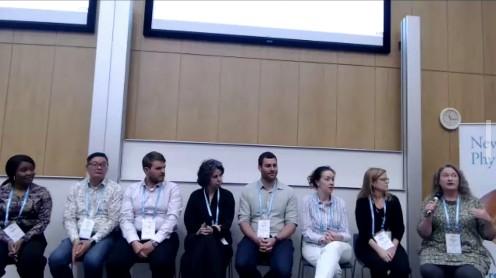
All successful applicants will present either a poster, or a short talk based on their submitted abstract.
Accepted attendees receive:
Free registration, including all conference meals, and social events
Attendees that are not within a commutable distance will also receive:
Three nights’ accommodation in the IISER Pune Guesthouse – most ECR delegates will be asked to share a room with a delegate of the same gender.
A small travel grant to assist with travel expenses.
-
It is the best opportunity to showcase your work and to meet with various people with various scientific experts. Also, it is a great platform to take a next step in life towards post doc or industries. So, everyone should apply and join
NGS Attendee 2025
-
This was by far the most inclusive and supportive meeting that I have been to. The focus on skills and careers was superb and the encouragement of ECRs throughout the whole meeting was fantastic.
NGS Attendee 2025
-
It was super motivating and engaging. I felt unjudged expressing myself. I had several opportunities to discuss with peers and seniors/mentors. These opportunities were mainly created by the organizers which demolished the barrier of shyness. The scientific quality was extremely high. Keynote speakers were great examples of how to be good scientific communicators. I learned a lot!
NGS Attendee 2025
-
This meeting offers an excellent opportunity to deepen scientific knowledge, gain insights on navigating research, and foster professional growth through interactions with editors and assistant editors from journals such as New Phytologist
NGS Attendee 2025
Keynote speakers
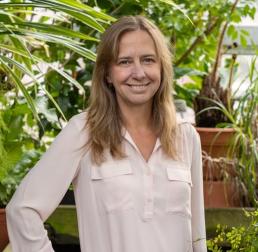
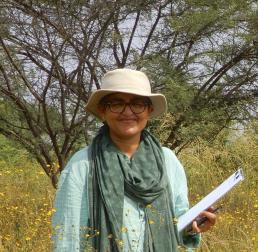
New Phytologist next generation scientists 2026 is pleased to confirm our 6 Keynote speakers:




Mentors
They will be joined by Mentors who will speak on panel discussions and participate in breakout activities. Additional mentors to be announced.

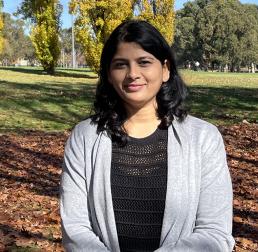

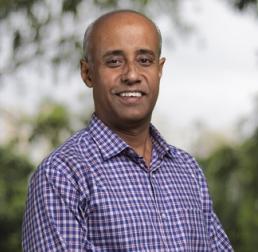











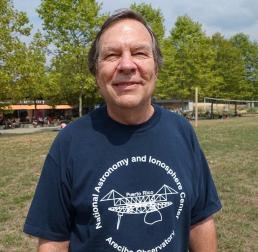

Please find a draft programme for New Phytologist next generation scientists 2026. This is subject to change.
Last updated 23 September 2026
Monday 30 Nov | |
Pre-symposium | Check in available at the IISER Pune Guest house for attendees with accommodation Please confirm your arrival and departure dates by 30 October 2026. There is no lunch/dinner planned for delegates, suggestions of options for lunch/dinner will be shared nearer the symposium |
Day 1 | Tuesday 1 Dec |
7:30 – 9:30 | Breakfast available at the IISER Pune Guest house for guest house residents |
From 10am | Registration opens at IISER Pune Guest house |
12:45 – 14:00 | Lunch |
14:15 – 14:30 | Welcome to NGS |
14:30 – 17:30 | Session 1To include keynote and selected talks from attendees |
17:30 – 18:30 | Poster session |
19:30 | Dinner and networking |
21:00 | Close of day 1 |
Day 2 | Wednesday 2 Dec |
From 7:30 | Breakfast available at the IISER Pune Guest house for guest house residents |
8:55 | Morning announcements |
9:00 – 12:45 | Session 2To include keynote and selected talks from attendees, and interactive breakout sessions |
12:45 – 13:45 | Lunch |
14:00 – 17:30 | Session 3To include panel discussions and breakout sessions |
17:30 – 18:30 | Poster session |
18:30 – 21:00 | Evening social activities to include dinner and networking |
21:00 | Close of day |
Day 3 | Thursday 3 Dec |
From 7:30 | Breakfast available at the IISER Pune Guest house for guest house residents |
8:55 | Morning announcements |
9:00 – 12:45 | Session 4To include keynote and selected talks from attendees, and panel discussions |
12:45 – 13:45 | Lunch |
14:00 – 17:30 | Session 5To include keynote and selected talks from attendees, and panel discussions |
18:30 – late | Evening social activities to include dinner and networking |
Day 4 | Friday 4 Dec |
From 7:30 | Breakfast available at the IISER Pune Guest house for guest house residents |
8:55 | Morning announcements |
9:00- 13:00 | Session 6To include keynote and selected talks from attendees, and panel discussions |
13:00 | Closing and prizes |
13:30 | Lunch |
Departure | Guest departing on 4 December can check out of their rooms at anytime |
Saturday 5 Dec | |
From 7:30 | Breakfast available at the IISER Pune Guest house for guest house residents |
By 11am | All delegates to check out of their accommodation by 11am |
Travel Grants
Delegates selected to attend New Phytologist next generation scientists will receive a small travel grant to assist with their attendance. The travel grant will be paid directly by bank transfer after the event to the delegate's nominated account. Travel grants are based on your location.
India-based, less than 500 km from Pune – 5000 R
India-based, more than 500 km from Pune – 7500 R
Indian subcontinent – £100
Rest of the world – £125
We expect that most international delegates will seek travel funding from their University/Institution, or have access to alternative funding.
How to apply for additional travel funding.
Update - all additional travel grant requests have now been processed and delegates were informed on 28 August if they were awarded any additional funds. If you have not received this, please contact the Events and Promotions Manager.
We appreciate that some delegates may have limited funding. The New Phytologist Foundation has limited additional funds for delegates where travel costs exceed the travel grants, and where additional funding sources are unavailable. Additional travel grants are generally in the range of £100 – £500.
Before applying to attend, we encourage you to discuss with your department/institution the support they could provide should you be accepted to attend the symposium. If this highlights that your institution is unlikely to be able to provide support for you to attend and you do not have alternative funding, you can highlight in your application that you need to request additional support. This travel support is limited and will be prioritised to delegates with the most financial need, and who have been highly rated during the application process. We may not be able to meet all requests for increases in travel grants.
When applying, you can indicate whether you would need to request additional funding to be able to attend. Asking for additional funding will not impact your selection, but please note that you may not be awarded additional funding, or you may not be awarded the full amount that you have requested. You will be told the level of funding (if any) you would receive with the outcome of your application, and you then have three weeks to confirm if you can attend.
Claiming a travel grant or travel contribution
When a travel grant, sometimes referred to as a travel contribution, has been awarded, the payment of the travel grant will not be issued until after the event.
The New Phytologist Foundation will have set a specific amount for the travel grant. No receipts are required to claim the travel grant. This allows the travel grant recipient to arrange their travel to best suit their needs.
Where possible, we encourage travel grant recipients to combine their travel to the event with other activities to make better use of the carbon footprint of attending the meeting.
The payment of a travel grant can be to the recipient's institution, or to their personal bank account, and will be made by a bank transfer. Travel grant recipients will receive a link to a secure form to provide their bank details to arrange the payment of the travel grant. Institutions may send an invoice for the amount of the travel grant to The New Phytologist Foundation. Please contact np-finance@lancaster.ac.uk with any questions about invoices.
If paying for their travel in advance will cause the attendee to experience a significant financial burden, or if the attendee will have difficulty in receiving a bank transfer from the UK, please contact the Events and Promotions Manager to discuss alternative options.
If the delegate is unable to attend the event, generally the travel grant will not be paid. Delegates are encouraged to take out travel insurance to cover them should they be unable to attend. Any request for a travel grant to be paid following non-attendance will need to be approved by the Executive Editor. We will request confirmation of travel expenses with receipts in these circumstances, as well as proof that the travel costs could not be refunded.
Eligibility criteria, and terms and conditions
Applications are open to current PhD candidates in plant science or researchers that have completed their PhD within the last five years. For the 2026 event applicants should have completed their PhD no earlier than May 2021. Career breaks are excluded. We encourage applications from early career researchers working in industry with active relevant research interests.
Due to high demand for delegate places, delegates who have previously attended a New Phytologist next generation scientists symposium in person are not eligible to attend for a second time. Delegates must be able to attend the entire symposium and partial participation is not possible.
If you have any questions about your eligibility, please contact the Events and Promotion Manager.
Code of conduct
By accepting a place at the symposium, you agree to abide by the The New Phytologist Foundation code of conduct, and follow all guidelines of the hosting institution, IISER Pune.
The New Phytologist Foundation celebrates diversity, and we expect participants in our meetings to be respectful, considerate and supportive of each other, to offer constructive critiques and embrace the variety of opinions on offer. New Phytologist Foundation events are an opportunity to share, develop and broaden our viewpoints within a safe and inclusive setting.
The New Phytologist Foundation has established a set of core principles that outline the standards expected of individuals involved in the Foundation’s activities, including symposia and workshops. We strive to treat all individuals with respect and promote a safe environment free from discrimination, harassment, and victimisation.
Expected behaviour
We respect the rights of all individuals to dignity, privacy and confidentiality and delegates must treat everyone with respect.
We ask delegates to respect their fellow participants and ensure they undertake good practices for intercultural collaborations. Several tips for intercultural communication can be found at Commisceo Global and CHRYSOS.
We ask that delegates remain mindful of their surroundings and respect the surroundings of their fellow delegates.
Do not share, copy, or reuse any materials presented by speakers unless this is expressly permitted.
All delegates must ensure they respect the staff, rules and protocols of the meeting venue, accommodation, and online platform. This also includes protocols linked to COVID-19.
We will not tolerate behaviours that involve discrimination of individuals or groups on the basis of sex, race, ethnicity, gender identity, age, religion, disability, or any other characteristic protected by applicable laws. Sexual harassment, bullying, intimidation, or harassment in any form will not be tolerated.
Any delegates that do not meet the expected respectful behaviour may be immediately removed from the online or physical meeting.
If you have any concerns or suggestions, please speak to the Events and Promotions Manager, Christine Phillips or the Executive Editor, Sarah Lennon. Alternatively, you can email np-events@lancaster.ac.uk.
Cancellation policy
If an accepted delegate is no longer able to attend, they should inform the Events and Promotion Manager immediately. NGS delegate places are non-transferable. We expect to have a long waiting list of people interested in attending, who will be contacted should any places become available.
If the delegate is unable to attend the event, generally the travel grant will not be paid. Delegates are encouraged to take out travel insurance to cover them should they be unable to attend. Any request for a travel grant to be paid following non-attendance will need to be approved by the Executive Editor. We will request confirmation of travel expenses with receipts in these circumstances, as well as proof that the travel costs could not be refunded.
Should circumstances beyond our control force the cancellation of the symposium, The New Phytologist Foundation is unable to accept liability for any additional costs incurred, including travel costs, and delegates are strongly encouraged to take out appropriate travel insurance to cover them in the event of cancellation.
Applications are open to current PhD candidates in plant science or researchers that have completed their PhD within the last five years. For the 2026 event applicants should have completed their PhD no earlier than May 2021. Career breaks are excluded. We encourage applications from early career researchers working in industry with active relevant research interests.
Due to high demand for delegate places, delegates who have previously attended a New Phytologist next generation scientists symposium in person are not eligible to attend for a second time. Delegates must be able to attend the entire symposium and partial participation is not possible.
If you have any questions about your eligibility, please contact the Events and Promotion Manager.
Letters of recommendation are generally provided by your PhD Supervisor, your PI or Group Leader. We also will accept letters of recommendation from other scientists that are familiar with your work and your research interests.
Letters can be included with your application, or they can be sent to np-events@lancaster.ac.uk by the application closing date.
Each meeting is organised by a local organising committee, which includes early career researchers. The meeting will include keynote talks from leading plant scientists, as well as selected talks from the early career researchers in attendance.
Additional highlights include panel discussions and workshops on topics of interest to early career researchers. These topics will be selected by the local organising committee. Previous meetings have featured topics including career paths, navigating grant applications and publishing ethics. In your application you can suggest topics/issues that you face as an early career researcher.
In addition to early career attendees, a number of Mentors will be invited from the plant science community. These will include Editors and Advisors of New Phytologist and other journals. Mentors will be available throughout the meeting, providing valuable networking opportunities, and formal and informal advice.
The most important part of the meeting is all the early career researchers in attendance. The event is designed to be supportive and inclusive for all attendees, and we hope that you will make contacts that will last a lifetime.
Accepted applicants will receive free registration, which will include:
Access to all sessions, including breakout workshops
All meals as per the schedule (including breakfast, lunch, dinner and break refreshments)
Applicants that are not within a commutable distance will also receive:
Three nights’ accommodation in the IISER Pune Guesthouse– most ECR delegates will be asked to share a room with a delegate of the same gender.
A small travel grant to assist with travel expenses.
Travel grants are based on your location.
India-based, less than 500 km from Pune – 5000 R
India-based, more than 500 km from Pune – 7500 R
Indian subcontinent – £100
Rest of the world – £125
We appreciate that some delegates may have limited funding. The New Phytologist Foundation has limited additional funds for delegates where travel costs exceed the travel grants, and where additional funding sources are unavailable. Additional travel grants are generally in the range of £100 – £500.
Before applying to attend, we encourage you to discuss with your department/institution the support they could provide should you be accepted to attend the symposium. If this highlights that your institution is unlikely to be able to provide support for you to attend and you do not have alternative funding, you can highlight in your application that you need to request additional support. This travel support is limited and will be prioritised to delegates with the most financial need, and who have been highly rated during the application process. We may not be able to meet all requests for increases in travel grants.
When applying, you can indicate whether you would need to request additional funding to be able to attend. Asking for additional funding will not impact your selection, but please note that you may not be awarded additional funding, or you may not be awarded the full amount that you have requested. You will be told the level of funding (if any) you would receive with the outcome of your application, and you then have three weeks to confirm if you can attend.
Claiming a travel grant or travel contribution
When a travel grant, sometimes referred to as a travel contribution, has been awarded, the payment of the travel grant will not be issued until after the event.
The New Phytologist Foundation will have set a specific amount for the travel grant. No receipts are required to claim the travel grant. This allows the travel grant recipient to arrange their travel to best suit their needs.
Where possible, we encourage travel grant recipients to combine their travel to the event with other activities to make better use of the carbon footprint of attending the meeting.
The payment of a travel grant can be to the recipient's institution, or to their personal bank account, and will be made by a bank transfer. Travel grant recipients will receive a link to a secure form to provide their bank details to arrange the payment of the travel grant. Institutions may send an invoice for the amount of the travel grant to The New Phytologist Foundation. Please contact np-finance@lancaster.ac.uk with any questions about invoices.
If paying for their travel in advance will cause the attendee to experience a significant financial burden, or if the attendee will have difficulty in receiving a bank transfer from the UK, please contact the Events and Promotions Manager to discuss alternative options.
If the delegate is unable to attend the event, generally the travel grant will not be paid. Delegates are encouraged to take out travel insurance to cover them should they be unable to attend. Any request for a travel grant to be paid following non-attendance will need to be approved by the Executive Editor. We will request confirmation of travel expenses with receipts in these circumstances, as well as proof that the travel costs could not be refunded.
Due to limited accommodation availability, delegates are not able to bring a guest with them. Should you have a specific need/requirement to have someone accompany you, please discuss this with the Events and Promotions Manager should you be selected to attend.
In 2026 we are using the Oxford Abstracts submission portal to collect applications.
If you have not previously used Oxford Abstracts, you will need to sign up for an account with an email address.
Oxford Abstracts provides a guide to making a submission.
Once you have logged into your Oxford Abstract account, you will be able to start your application.
Please note that the system may use the term “author” instead of applicant.
There are three pages of the application form:
Page 1 Your details, including your abstract, and personal statement and academic history
Page 2: Details of your reference.
Page 3 Planning and demographic information. This will be used for reporting, and planning by The New Phytologist Foundation staff.
Please ensure you complete all mandatory fields. Incomplete applications may be rejected. Once you submit your application you can amend it up to the deadline of 20 May 2026.
If you want to save your application and continue working on it later, please ensure that you click “next page” or “submit”. You may be notified of incomplete fields, but this will save your progress, and you can return later to complete the form.
Oxford Abstracts provides further guidance for submitters: Support - Oxford Abstracts Knowledge Base
Visa information
Many international attendees will require a visa to enter India.
Further details on Indian visas are available at: https://indianvisaonline.gov.in/
Country specific guidance is available at: https://boi.gov.in/boi/country-specific-guidelines
Attendees will generally apply for a conference e-visa. This requires that all international participants’ details are sent to the Ministry of External Affairs (MEA) for approval. Due to this, all international delegates must confirm their attendance and complete the registration process including providing their passport details directly to IISER Pune no later than Monday 21 August 2026.
Once approval is received by the Ministry of External Affairs the relevant approval documents will be shared with international delegates, along with instructions on how to complete their application for an e-visa. Please be aware that the MEA approval document will include the passport details of all international participants.
In addition to the MEA approval document, The New Phytologist Foundation will provide a visa invitation letter on behalf of the symposium organisers.
Delegates are responsible for applying for their own visa, and for paying any relevant fees.
Health and vaccination requirements for entry to India
All delegates should ensure they have travel insurance that would cover them in the case of illness. Please check if you are eligible under your university or institution travel insurance policy.
Delegates arriving from outside of India should ensure they have the relevant required vaccinations for travel to India.
You are encouraged to check public health travel websites for further details, such as Travelhealthpro (https://travelhealthpro.org.uk/country/105/india#Vaccine_Recommendations).
Please take particularly note of the Yellow Fever vaccination certificate requirements if you have recently travelled from an area considered to be Notified Yellow Fever Endemic Countries.
Further details are available at: https://boi.gov.in/boi/country-specific-guidelines
Travel information
How to Reach Pune
Pune is well connected by air, rail, and road to other major cities in India. The airport is located in Lohegaon. When arriving by train or bus, you can alight at either Pune Junction (main railway station and bus stand) or Shivajinagar station/bus stand. Another option, particularly for international visitors, is to travel to Mumbai and then take a taxi, bus, or train to Pune. International delegates may find that flights to Mumbai are less expensive. A taxi from Mumbai airport to IISER Pune costs about £35-£50 one way.
Delegates will be send a shared document where they can add their expected arrival and departure times to find other delegates to share transport.
Further information on travel to Pune, including more details on public transport options and taxis will be updated in due course.








New Phytologist next generation scientists advisory board
Keith Lindsey, Chair of the New Phytologist Foundation, Durham University, UK
Simon Hiscock, Plants, People, Planet Editor-in-Chief, Oxford Botanic Garden and Arboretum, UK
Marjorie Lundgren, Plants, People, Planet Editor, Lancaster University, UK
Maarja Öpik, New Phytologist Editor-in-Chief, University of Tartu, Estonia
Mark D. Rausher, New Phytologist Editor, Duke University, USA
Early career delegates who are not local to Pune will receive 3 nights accommodation at the IISER Pune Guest House. Delegates will share a twin en-suite room with a delegate of the same gender.
Keynote speakers, mentors and other invited guests will also stay at the Guest House, and will be provided with an en-suite room for single occupancy.
Should you have access requirements that may require alternative accommodation arrangements, please get in touch with the Events and Promotions Manager no later than Monday 14 September.
As standard accommodation will be arranged to check in on Tuesday 1 December and check out on Friday 4 December.
The guest house does have availability to extend stays to arrive on Monday 30 November and /or depart on Saturday 5 December.
Should your travel arrangements require you to arrive a day early, and/or depart a day late, we will waive the cost of up to two additional nights. Otherwise the cost of extending your stay would be taken from your travel grant.
The cost of extending your stay is 1300R (Approx £11) a night for a shared room, this includes breakfast.
Accommodation arrival and departure dates should be confirmed by Friday 30 October.
Please note that there is extremely limited availability to extend accommodation to arrive earlier than Monday 30th November, or stay after 5th December due to other events taking place at the guest house. We can request extensions, but delegates may need to make alternative accommodation arrangements if the guest house is unable to accommodate them. Please request any extensions by Friday 30 October
Warning about Scam accommodation emails.
Scam accommodation emails
The New Phytologist Foundation is aware that third-party companies are targeting New Phytologist Symposium speakers and attendees with a fraudulent travel and hotel booking scheme.
Other organisations have also reported this scam, which targets conferences where the list of speakers/poster presenters is publicly available.
Please be aware that the New Phytologist Foundation does not work with any third-party accommodation partners to book accommodation or travel for delegates or speakers. We have not provided your details to any third-party, or authorised any third-party to contact you.
Any communication about the symposium will be done directly with delegates and speakers and the Events and Promotions Manager (Christine Phillips) or other Central Office staff, using np-events@lancaster.ac.uk, or np-finance@lancaster.ac.uk, or using our registration platform Oxford Abstracts, which will still have a reply email of np-events@lancaster.ac.uk.
Please be aware that any third-party contacting delegates about New Phytologist Symposia accommodation or travel is a scam designed to obtain your credit card information and/or make inflated charges to your credit card. Please exercise extreme caution if contacted by any third-party. We recommend that you do NOT give out your credit card number, personal information, or any details about your hotel reservation. We are aware that speakers and attendees that have given their credit card information have incurred substantial credit card charges (cancellation fees, service fees, etc).
If you receive a phone call or email from a company offering a hotel and travel booking service please forward the information to np-events@lancaster.ac.uk.
You can also report the email to your IT department as fraud and/or a phishing email. This may help to prevent further people being targeted at your institution.
If you are based in the UK, you can report scams and phishing emails to the UK National Cyber Security Centre.
If you are based in the EU, you can report fraud to the European Anti-Fraud Office.
If you are based in the USA, you can report Cyber-Enabled Frauds and Scams to the FBI's Internet Crime Complaint Centre.
Talk timings
Keynote speakers have been allocated 20-25 min for their talk and 5-10 min for Q&A (30 min total)
Selected speakers have been allocated 10 min for their talk and 5 min for Q&A (15 min total).
The chairs will strictly keep to time, so please assist them in keeping your talk within the allocated time. The chairs will have flash cards to warn you if you run over.
Please note that as your are giving an oral presentation, you will not present a poster.
Recording and streaming of talks
Sessions will be broadcast on Zoom to registered online delegates, as well as available on-demand publicly after the symposium, on our New Phytologist Events Cassyni page, you can view last year's recordings here: https://cassyni.com/s/npnextgen2025. If you have indicated that you do not want your sessions streamed or recorded, your talk will be omitted from this, and you will be scheduled to speak last in your session.
Presentation slides
As we will be streaming talks to online delegates, we must have the final copy of your slides in advance. Your slides will be presented from a central computer, and you will have a remote to advance your slides. We would advise against relying on speaker notes in PowerPoint as they may not display properly but would suggest you bring hard copy notes as reference.
We suggest that for a 10 minute presentation, you should have around 10 slides.
Want advice about prepairing a good presentaiton? Watch a webinar with New Phytologist editors on communicating your research.
Please send your slides by Monday 23 November
Please provide your slides as PowerPoint files in a 16:9 slide ratio.
We will add on a title slide and a concluding Q&A slide to your presentaion, you can see an example in this template.
If you cannot provide PowerPoint files, please let us know by Monday 16 November so we can provide assistance in converting your slides.
In early November we will provide you with a link to a shared folder to upload your slides.
Making last-minute changes to your presentation
Please note that all presentation files will be loaded into a central slide deck by session to enable us to present online and record each session. This means that making last-minute changes to your slides will be difficult. For any essential minor corrections, we can make emergency last-minute corrections up to the day before, please clearly state which slides need replacing.
AV information
Full details of the AV set-up are still being confirmed; however, speakers will need to ensure that they use the provided microphones during their talks.
Abstract book
We will be including your abstract in a PDF abstract book that will be available on the symposium website. We will shortly circulate a draft of this for you to check.
Please note that in the abstract book we are only listing you as the primary author, and we are not including co-authors. You are welcome to list all your co-authors in your presentation / poster.
If you would like to make any other updates to your abstract, please get in touch and let us know what needs updating. We will be publishing the abstract book online in early November, therefore please provide any updates by 2 November.
If you want to change any of the content of your abstract, depending on the nature of the update this may need to be approved by the organising committee.
Delegates should bring their printed poster with them. Posters will be displayed from the first day of the Symposium and will remain up for the duration of the Symposium. There will be several dedicated poster sessions and each poster presenters will be allocated to one of the sessions. Sessions and poster numbers will be confirmed in due course. Please note that you do not need to include your poster number on your printed poster.
Want advice on creating a good poster? Watch a webinar with New Phytologist Editors on communicating your research.
Poster guidelines
Posters should be portrait, no larger than A0 (84cm by 119cm), or 3ft by 4ft (92cm by 122cm).
Good posters should present complex information in a clear and concise way. Posters that present information well will have graphics with large, clear fonts and images, and attractive backgrounds.
The text and figures should be readable from a distance of at least one metre. The text presented should be precise and structured with a logical flow to the information.
Posters should concentrate on focused problems, innovative solutions, rigorous methodologies, and should be significant contributions to the meeting.
One tip to make bringing your poster with you easier is that you can ask for your poster to be printed on fabric, which will allow for it to be folded into your luggage.
Suggestions of places delegates can get their posters printed locally in advance will be provided in due course. Please note that if you are planning to get your poster printed locally, we recommend that you have it sent to be printed at least 10 days prior to the symposium.
Poster competition
Prizes will be awarded for the best posters. All registered delegates can vote for the best poster, with a prize of £200 for the top poster and £100 for a runner up.