
Everywhere you look around the world, you will find signs of people and planet suffering from the impacts of global environmental challenges.
Source: UNEP press release.
Context
On the 5 of June 2027, The Republic of Serbia, together with the UN Environment Programme, will host World Environment Day 2027, forming the largest global platform for environmental engagement and action. The themes of this event include climate action, the circular economy, cleaner air and water, biodiversity, and sustainable food systems with the intention to “turn awareness into concrete action for people and planet” (Sara Pavkov, Serbian Environment Minister).
Advancing plant-focused solutions to environmental and global challenges are at the heart of the mission of Plants, People, Planet. Given the strong alignment between the aims of Plants, People, Planet and World Environment Day in terms of addressing global issues, we are calling for submissions to a Special Collection on the theme of advancing plant-focused solutions for building resilient, green and sustainable cities. The Special Collection will cover key themes that are central to the focus of World Environment Day and consider how to address the global environmental challenges created by urbanisation. To ensure maximum scientific and policy impact for authors and their work, we intend to publish the Special Collection to coincide with World Environment Day on 5 June 2027.
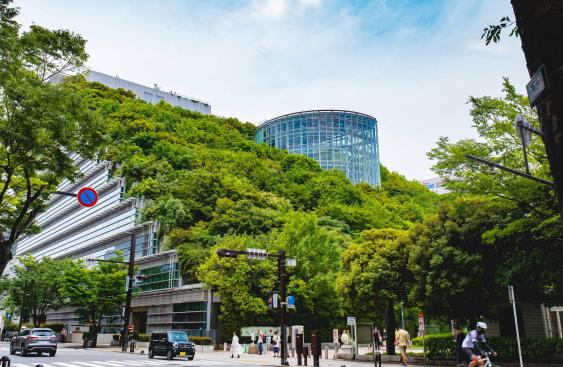
Today, more than half of the global population, over 4 billion people, live in cities. By 2050, this will likely increase to nearly 7 in 10 people worldwide. Rapid, global urbanisation places increasing pressure on the planet creating urgent challenges that must be addressed to ensure a healthy and resilient world for all. How can cities be designed to support, rather than disrupt, the natural systems on which they depend? Green cities – which we define here as cities in which ecosystems and the natural world are supported by and integrated within urban design – offer a promising solution to help address this challenge by prioritising environmental sustainability, climate resilience, and societal well-being.
Plants, and the wide benefits they provide, play a central role in the development of green cities by turning the ‘grey to green’. In this context, plants provide opportunities, not only to benefit the health and wellbeing of urban citizens, but to also address the wide range of challenges posed by increasing urbanisation for people and the planet.
Plant researchers working within and across disciplines will play a crucial role in providing the scientific evidence and plant-focused solutions to advance the development of green cities and to tackle the issues created by urbanisation, but where are the gaps in knowledge and expertise, what are the emerging interdisciplinary frontiers, and what are the critical challenges and opportunities that urgently need to be explored?
In addition, how can researchers work with policymakers, governmental and non-governmental organisation officials, urban planners, and any other relevant decision-makers, practitioners and communities, to ensure fruitful and collaborative partnerships that ensure real-world impact to tackle global issues related to urbanisation or to advance green cities?
The focus of the Special Collection
It is in the context of these broad questions that we call for impactful submissions from across disciplines to advance thinking on and to deliver, plant-focused solutions to support the development of green and sustainable cities to address the challenges posed by urbanisation.
We welcome single- and inter-disciplinary works on this theme that capture the following broad topics that span the ‘three Ps’ of Plants, People and the Planet, but please note this list is not exhaustive:
Plants:
Biodiversity and conservation; urban forests; resilient ecosystems; ecosystem services; biotic and abiotic interactions; urban nutrient cycling; environmental restoration and remediation.
People:
Human health and wellbeing; policy and urban planning development; engineering; biomimetics; environmental economics; environmental social sciences; food security and urban agriculture; cultural enrichment; citizen science.
Planet:
Nature-based climate solutions, climate adaptation and mitigation; clean air and water, and pollution reduction; reversing environmental degradation.
We will bring together an exciting collection of innovative Research, Reviews, including our flagship Thomas Reviews, Methods and Techniques, Brief Reports, and Opinions, that provide scientific data, case studies, novel perspectives, and policy-relevant evidence to support plant-focused solutions to the challenges posed by urbanisation and to encourage the development of green cities.
We aim to encourage policy action with the Special Collection and hence we welcome Open Letters that call for policy change and address policymakers and other decision-makers attending or involved with World Environment Day 2027. Along similar lines, we encourage Policy Briefs that provide practical, and actionable, policy recommendations to bridge the gap between scientific research and policy action.
Given the aims of the Special Collection and our intention to publish it to coincide with World Environment Day 2027, authors are encouraged to consider their work in the context of World Environment Day and to connect their findings to relevant Sustainable Development Goals of the United Nations. We also encourage authors to highlight and discuss their work in the context of any relevant country or regional level activities, such China’s ‘National Forest Cities’ and ‘Climate-Resilient Cities’ initiatives.
Hashtags for social media:
#WorldEnvironmentDay; #NowForClimate; #PlantsInPolicy; #GreenCities
Brief Author Guidelines for authors
Deadline for submission of manuscripts: 15 November 2026
There are no guarantees of acceptance: submissions will undergo regular peer-review and only those meeting required publishing standards will be accepted. Please refer to the journal’s website for further details on scope, article type, how to compile your manuscript, as well as full details on style and legal requirements.
Plants People Planet’s Author Guidelines
Contact
All enquiries should be directed to Bennett Young, Managing Editor, Plants, People, Planet.