
On the role of mutualisms in plant biogeography: consequences for ecology, evolution, and invasion
Camille S. Delavaux
On the role of mutualisms in plant biogeography: consequences for ecology, evolution, and invasion
Most plant species world-wide depend on one or more mutualisms – beneficial associations with other species. Evidence is emerging that these biotic mutualisms shape plant biogeography (i.e. distributions). In particular, the absence of these mutualist partners limits plant establishment (i.e. the mutualist filter). Moreover, this mutualism filter has subsequent consequences for plant ecology, evolution, and invasion. However, a review of such evidence and a synthesis of mechanisms underpinning the mutualist filter are lacking. Therefore, here, I present evidence for the mutualist filter, discuss ecological and evolutionary consequences of this filter, and develop a synthetic framework, generating several cross-mutualist predictions of mutualist filter strength. The mutualist filter should increase with higher mutualist dispersal limitation, specificity and dependency of association, and an increasing number of mutualisms. Together, this offers a path to shift our abiotic and antagonistic centric perspective in plant biogeography to integrate these pervasive mutualistic biotic interactions.
Biography
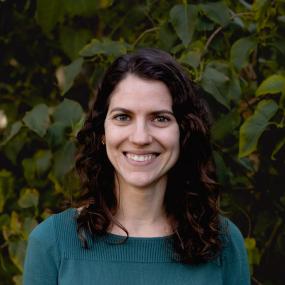
Camille is an ecologist studying plant–mutualist interactions in a changing world. Broadly, her research focuses on these interactions and their consequences for biogeography, diversity, and invasion. Her research combines molecular biology, controlled experiments, field ecology, big data analysis, and modeling to answer related questions. Her work has shown that microbial mutualists mediate plant biogeography and diversity, revealed anthropogenic impacts on plants and plant–associated microbes, and substantially advanced bioinformatics tools to identify the full diversity of plant–associated mutualists. Ultimately, she is motivated by how her research may inform successful conservation and restoration of degraded systems.
Camille is a senior researcher at the Netherlands Institute of Ecology (NIOO–KNAW). She completed her bachelor's degrees in Earth and Environmental Science and Spanish Language and Literature at Lehigh University (USA), a Master's of Environmental Science at Yale University (USA), and a PhD in Ecology and Evolutionary Biology at the University of Kansas (USA). Before her current position, she was a postdoctoral researcher and subsequently a lead scientist at ETH Zurich (Switzerland).
https://nioo.knaw.nl/en/employees/camille-delavaux