Biography
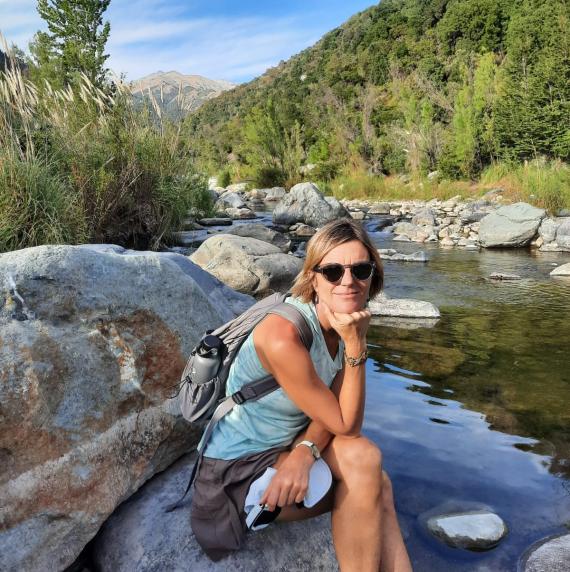
Dr. Piper is a plant ecophysiologist interested in the evolutionary and ecological causes and implications of resource allocation in trees. Her research focuses on the roles of nutrients and carbohydrates’ storage in plant resilience to climate change and has included diverse topics like drought resistance, treeline formation, and herbivory tolerance. She has worked in different ecosystems of Chile, including the subantarctic forests in Patagonia, the temperate rainforest, and the treeline of the southern Andes. One of her main scientific motivations is to understand why the most nutrient-limiting and climatically harsh environments of southern South America are not dominated by evergreen trees, as theory predicts, but by a few deciduous species. Dr. Piper obtained a PhD Degree in Biological Sciences at University of Concepción (Chile) in 2007. Between 2009 and 2021, she worked at the Research Center of Patagonian Ecosystems (CIEP), Chile. Since 2022, Dr. Piper is Associate Professor in the Institute of Biological Sciences at the Universidad de Talca and head of the Laboratory of Plant Ecophysiology. She is member of the Editorial Boards of Tree Physiology and Journal of Ecology and has published over 70 scientific articles in different journals.
Shining a new light on parasitic plants: resistance to invasion
Alex Fajardo, Claudia Reyes‐Bahamonde, Francisco E. Fontúrbel, Frida I. Piper, Ragan M. Callaway