
The coexistence of woody and herbaceous plants in terrestrial ecosystems remains a fundamental question for plant and ecosystem scientists.
Explaining when and why trees, shrubs and grasses occur together is central to predicting carbon storage, water fluxes, fire regimes and biodiversity changes. A mechanistic understanding of this coexistence becomes particularly pressing in the context of global change.
This Virtual Issue brings together recent advances in our understanding of woody–herbaceous coexistence, spanning alternative ecosystem states, ecohydrological processes, demographic bottlenecks, fire, herbivory, and trait-based perspectives.
By integrating diverse methodological approaches, from field experiments to modeling and forecasts, we explore the range of new evidence published in New Phytologist for how coexistence mechanisms operate across contexts and scales.
We welcome future submissions on woody–herbaceous coexistence and will add to this collection, as new works are published, to form an evolving resource. Contact Holly Slater, Senior Commissioning Editor, if you have an idea for a paper that might fit.
Guest Editors: Lucio Biancari and Amy T. Austin
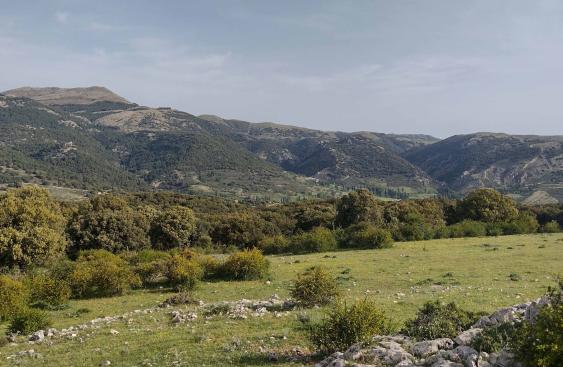
Cover image courtesy of Lucio Biancari: Mosaic landscapes where woody plants and herbaceous vegetation coexist are widespread across the world, and their relative abundance strongly influences ecosystem structure, functioning, and composition. This image from Spain illustrates a mixed landscape of trees, shrubs, grasses, and forbs typical of Mediterranean montane systems, where multiple plant life forms interact.