
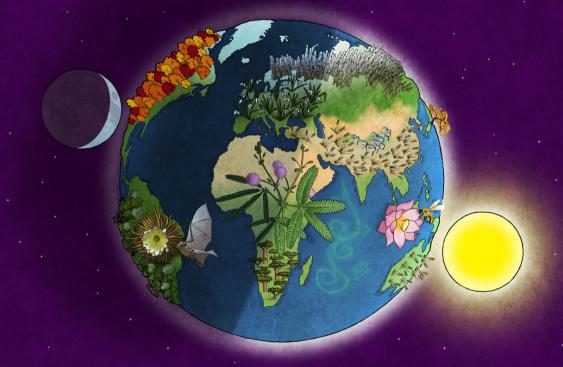
We're pleased to announce that registration and abstract submission for the 49th New Phytologist Symposium, Biological timing in photosynthetic organisms, is now open. The symposium takes place at the John Innes Centre, Norwich, UK, 24–27 May 2027.
The deadline for abstract submissions and travel grant applications is 25 January 2027.
Why should every plant biologist care about biological timing?
Virtually all aspects of plant life are shaped by temporal regulation across many scales, including the cycles of day and night, and the seasons of the year. This symposium brings together diverse topics in biological timing including environmental signalling, evolution, field biology, modelling, epigenomics, organismal interactions, and how circadian clocks and seasonal timing can be leveraged for crop breeding.
Organising committee
María Veronica Arana, CONICET, Argentina
Ant Dodd, John Innes Centre, UK
Josh Gendron, Yale, USA
Carlos Hotta, University of São Paulo, Brazil
Nathalie Verbruggen, Free University of Brussels, Belgium
Invited speakers
María Veronica Arana, CONICET, Argentina
Rishikesh Bhalerao, SLU / Umeå Plant Science Center, Sweden
Isabelle Carré, University of Warwick, UK
Nicole Creux, University of Toulouse, France
Ant Dodd, John Innes Centre, UK
Colleen Doherty, North Carolina State University, USA
Maria E Eriksson, Umeå University, Sweden
Josh Gendron, Yale, USA
Rodrigo Gutierrez, Pontificia Universidad Católica de Chile, Chile
Mike Haydon, University of Melbourne, Australia
Karolina Heyduk, University of Connecticut, USA
Rob Ingle, University of Cape Town, South Africa
Fanjiang Kong, Guangzhou University, China
Hiroshi Kudoh, Kyoto University, Japan
Todd Michael, Salk Institute for Biological Studies, USA
Norihito Nakamichi, Nagoya University, Japan
Akiko Satake, Kyushu University, Japan
Ashutosh Srivastava, Indian Institute of Technology Gandhinagar, India
Wei Wang, Peking University, China
Alex Webb, University of Cambridge, UK
Elizabeth M Wolkovich, University of British Columbia, Canada
Xiaodong Xu, Henan University, China
Marcelo Yanovsky, Fundación Instituto Leloir, Argentina

49th New Phytologist Symposium
Biological timing in photosynthetic organisms
The symposium will focus on the importance of biological timing across all scales of plant biology, from molecules to organisms, communities, and ecosystems

About our Events
Find out more details about our Events, including Symposia, Workshops, and Webinars.